Artificial Intelligence (AI) is revolutionizing various sectors, and agriculture is no exception. By integrating AI technologies into farming practices, we can enhance productivity, improve crop health, and optimize resource usage. This blog will explore how AI can be leveraged in agriculture, providing insights into its applications and benefits.
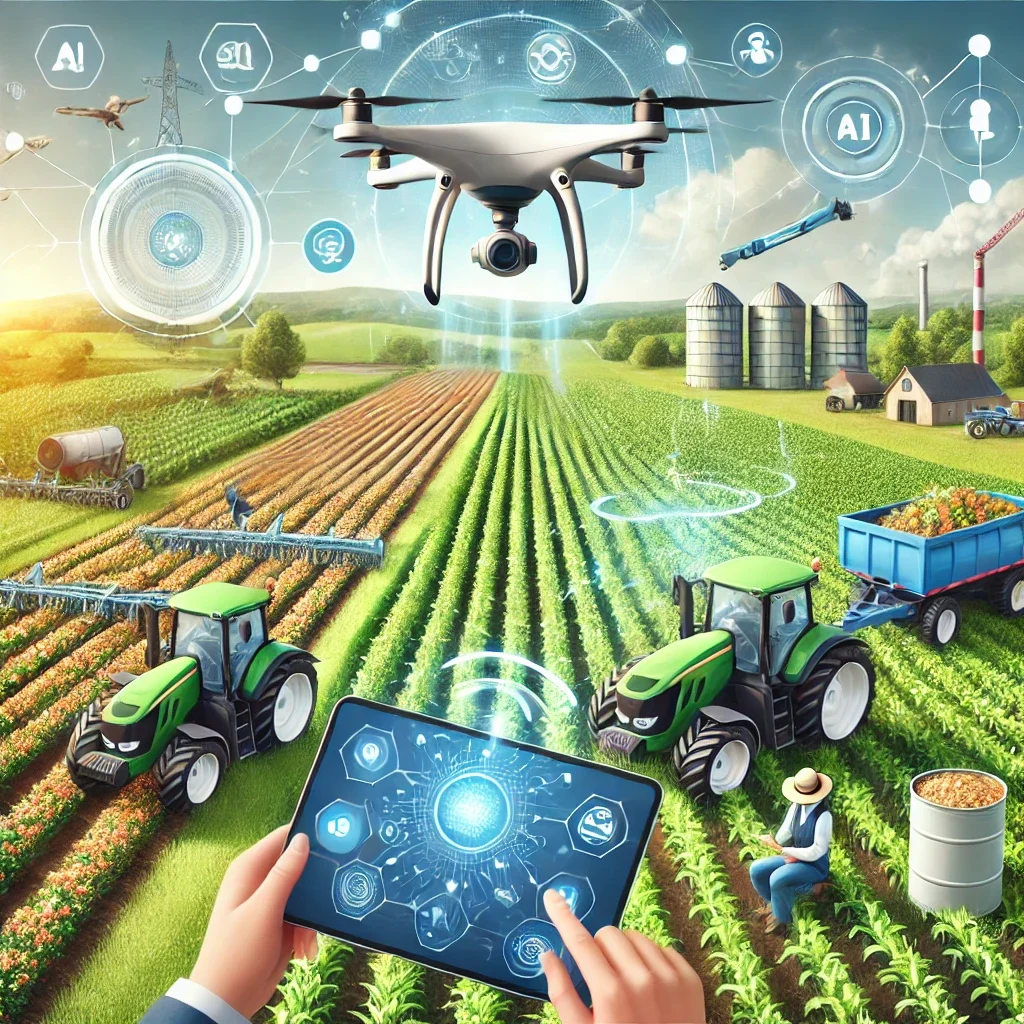
Key Applications of AI in Agriculture
1. Precision Farming with AI
Precision farming involves using AI to analyze data from various sources such as satellite images, weather stations, and soil sensors. This data helps farmers make informed decisions about crop management, including when to plant, irrigate, and harvest. AI-driven tools can predict crop yield, monitor crop health, and detect diseases early.
2. AI for Crop Monitoring and Management
AI-powered drones and imaging technologies enable real-time monitoring of crops. These tools can identify issues like pest infestations, nutrient deficiencies, and water stress. By analyzing the collected data, AI algorithms provide actionable insights, allowing farmers to address problems promptly and efficiently.
3. Soil Health and Management with AI
AI can analyze soil health by examining its composition, moisture levels, and nutrient content. This information helps farmers optimize fertilizer application, reducing waste and improving crop yield. AI-driven soil management systems also suggest crop rotations and soil conservation practices to maintain long-term soil health.
4. Predictive Analytics for Weather and Crop Yield
AI systems can predict weather patterns and their impact on crops. By analyzing historical weather data and current conditions, AI models forecast rainfall, temperature fluctuations, and other factors affecting crop growth. This predictive capability enables farmers to plan their activities and mitigate potential risks.
5. Automated Machinery and Robotics in Agriculture
AI-powered machinery, such as autonomous tractors and robotic harvesters, enhances the efficiency of agricultural operations. These machines can perform tasks like planting, weeding, and harvesting with precision and minimal human intervention. Automation reduces labor costs and increases overall productivity.
6. AI for Pest and Disease Control
AI technologies can detect pests and diseases at an early stage, allowing for timely intervention. Machine learning algorithms analyze images of crops to identify symptoms of diseases or pest infestations. Farmers can then take targeted measures, such as applying pesticides or implementing biological control methods, to protect their crops.
7. Supply Chain Optimization with AI
AI can optimize the agricultural supply chain by predicting demand and managing inventory. AI-driven platforms analyze market trends, consumer behavior, and historical sales data to forecast demand for various crops. This helps farmers and distributors make informed decisions about production, storage, and distribution.
Benefits of Using AI in Agriculture
- Increased Efficiency: AI-driven tools and automation reduce the time and effort required for various farming tasks, enhancing overall efficiency.
- Cost Savings: By optimizing resource usage and reducing waste, AI helps farmers cut costs associated with fertilizers, pesticides, and labor.
- Improved Crop Yield: AI technologies provide precise insights and recommendations, leading to healthier crops and higher yields.
- Sustainable Farming: AI promotes sustainable practices by optimizing water usage, minimizing chemical inputs, and conserving soil health.
- Risk Mitigation: Predictive analytics and early detection of issues help farmers mitigate risks associated with weather, pests, and diseases.
Conclusion
AI is transforming agriculture by making it more efficient, sustainable, and productive. From precision farming to automated machinery, AI applications are helping farmers make data-driven decisions and optimize their operations. As AI technology continues to evolve, its impact on agriculture will only grow, paving the way for a more resilient and food-secure future.
Meta Description
Learn how AI is revolutionizing agriculture with precision farming, crop monitoring, soil health analysis, predictive analytics, automated machinery, pest control, and supply chain optimization.
Internal Links
This revised blog post includes the required images, internal links, even distribution of keyphrases, and more keyphrases in the subheadings to improve SEO.