Reviewed and updated: 12 August 2026
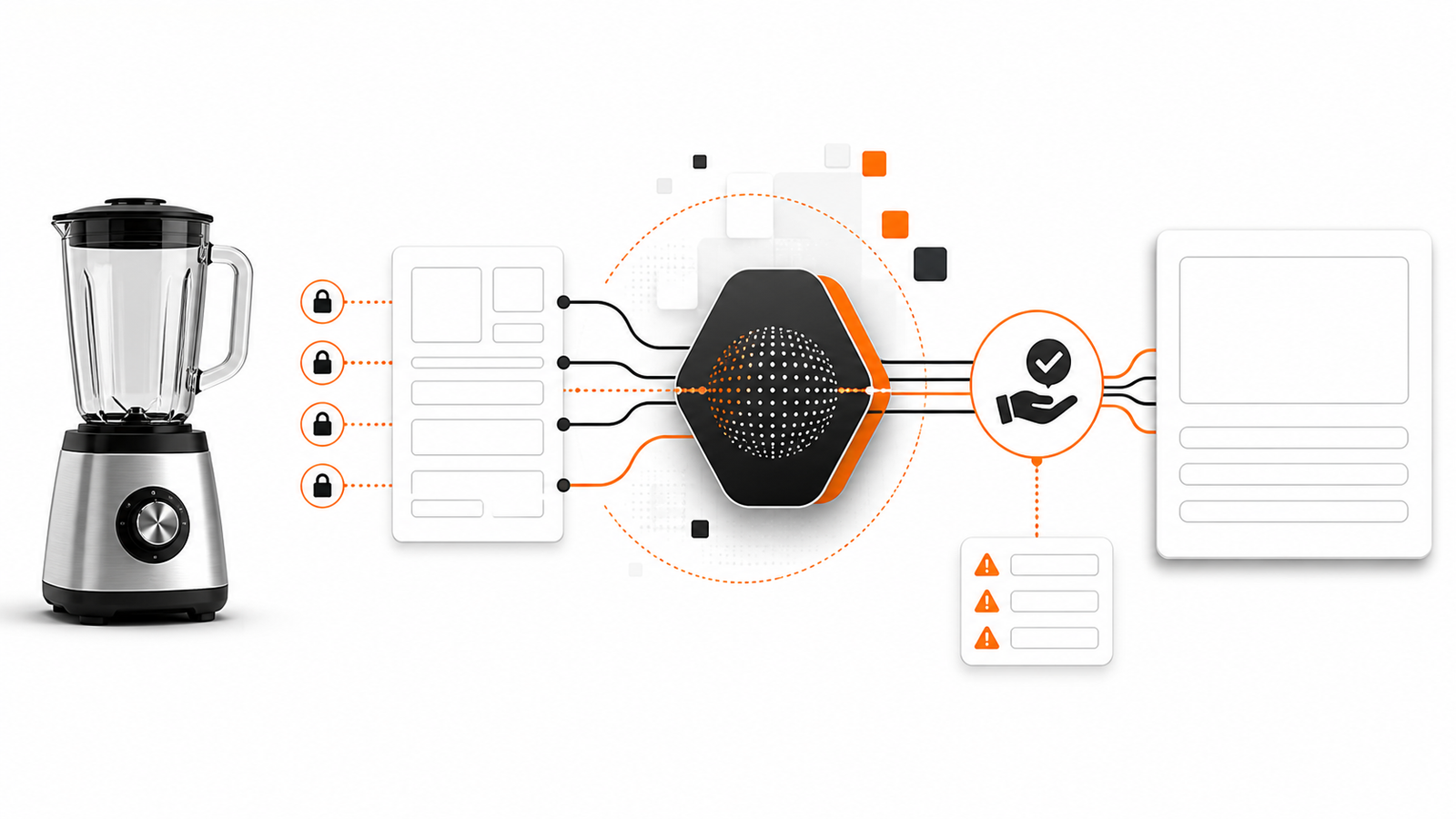
Use AI for product descriptions only after creating an approved source pack. Separate locked facts from permitted interpretation, define the buyer and channel, require the model to mark missing information instead of guessing, then run product, commercial and claim review before release. Keep the source version and corrections so the process learns without silently rewriting product truth.
This root guide owns the AI-assisted description workflow and prompt contract. This guide gives you an operating method, not a promise of rankings, enquiries, sales or profit. Platform policies, fees, eligibility and laws can change, so verify the linked primary sources and your own commercial records before implementation.
Table of contents
- What this guide helps you decide
- Build the source-of-truth sheet first
- A practical implementation workflow
- Use the decision table
- Apply it to Indian product businesses
- Use AI without losing business truth
- Avoid the common failure patterns
- Measure progress with operating evidence
- A 30-day implementation plan
- Frequently asked questions
What this guide helps you decide
The real question is not whether AI product-description writing sounds useful. The question is whether it solves a defined buyer or operating problem for one product, audience and channel without breaking product truth, margin, consent or delivery capacity.
Use these diagnostic questions before spending money or assigning work:
- Which fields must remain exact character-for-character?
- Which benefits are supported by approved facts or evidence?
- What channel limits and buyer questions apply?
- Who reviews product, commercial and regulated claims?
Write the answers in one decision note. If a critical answer is unknown, make discovery the next task. Do not let an attractive tool, template or competitor example silently become the strategy.
Build the source-of-truth sheet first
Every execution step should pull facts from an approved record. A source-of-truth sheet prevents a copywriter, agency, AI tool or busy salesperson from filling a gap with a plausible but wrong product promise.
| Truth item | Authoritative source | Owner | Stop condition |
|---|---|---|---|
| Product and offer facts | Approved SKU, catalogue and offer master | Product or merchandising owner | A buying-critical field is missing or inconsistent |
| Buyer need and language | Recorded enquiries, interviews and sales notes | Sales or customer owner | The audience is assumed rather than evidenced |
| Price, margin and fulfilment | Current finance, stock and delivery records | Finance or operations owner | The promise cannot be fulfilled profitably or reliably |
| Channel and permission rules | Current platform policy and consent record | Channel owner | Permission, eligibility or policy is unclear |
Add a version date to the sheet. When price, stock, specification, channel rule, audience permission or fulfilment promise changes, pause affected assets until their owner approves the update.
A practical implementation workflow
Step 1: Create the source pack
Include exact identity, variants, specifications, included parts, approved claims, price/terms, images and forbidden inferences.
Evidence before moving on: Versioned source owned by product and commercial teams.
Step 2: Write the prompt contract
State audience, page role, structure, locked facts, allowed changes, prohibited claims and missing-data behaviour.
Evidence before moving on: A test output exposes unknowns instead of guessing.
Step 3: Generate field by field
Draft title, short answer, bullets, specifications and FAQ separately when risk differs.
Evidence before moving on: Each section maps to source fields.
Step 4: Run three reviews
Check product truth, buyer clarity and commercial/claim compliance.
Evidence before moving on: Named reviewers and correction log.
Step 5: Publish and monitor
Preserve source/version, compare channel rendering and record questions, returns and corrections.
Evidence before moving on: Rollback path and refresh trigger.
Do not combine all steps into one launch. A small controlled version creates evidence that can be reviewed. A large rollout creates more places for the same unnoticed error to spread.
Use the decision table
| Situation | Recommended action | Avoid |
|---|---|---|
| Source fact is missing | Leave a flagged placeholder | Letting AI infer from image or similar SKU |
| Benefit is plausible but unproven | Use the specification or remove it | Presenting it as fact |
| Channel requires structured AI disclosure | Follow the current specification | Hiding generated content |
| Many SKUs share a template | Reuse structure but require unique fields and review | Near-duplicate mass publishing |
Treat this table as a starting policy. Your product risk, average order value, buying cycle, staff coverage, cash cycle and after-sales burden may require stricter gates.
Apply it to Indian product businesses
Apparel
The source pack locks fibre, measurements, care and included pieces. AI may improve order and clarity but cannot invent fit, opacity or occasion claims.
Proof to keep: Product audit and return reasons.
Industrial component
Drawing and technical record own dimensions and compatibility. AI drafts a readable summary with source references and a specialist approval gate.
Proof to keep: Specification mismatch and RFQ questions.
Homeware
Images show context but not dimensions or capacity. AI uses approved measurements and marks lifestyle language as non-proof.
Proof to keep: Page audit and complaint log.
These examples are intentionally operational rather than aspirational. Replace every placeholder with current records from the actual business. Do not present a fictional example as a client result or an industry benchmark.
Use AI without losing business truth
AI can help organise approved facts, draft alternatives, summarise interviews, classify enquiries, produce controlled content variants and flag missing fields. It must not invent specifications, materials, prices, discounts, stock, delivery dates, certifications, customer consent, testimonials or commercial results.
Use a four-part control:
- Bound the input: provide only permitted, current source material.
- Constrain the output: state what may change and what must remain exact.
- Review by role: the product or commercial owner checks buying-critical facts.
- Record release evidence: keep the source version, prompt or brief, reviewer, corrections and approval date.
For customer data, use approved accounts and collect only what the workflow genuinely needs. Do not paste private buyer lists, confidential price sheets or unreleased product files into an unapproved tool. India’s data-protection requirements and implementation timelines should be checked against current official MeitY material and qualified advice for the business.
Avoid the common failure patterns
- Prompt-only workflow: Build a source pack and approval system.
- Inferring from images: Treat images as bounded evidence, not unseen specification.
- One reviewer for everything: Assign product, commercial and specialist roles.
- Bulk publishing: Sample, audit and expand only after defects are controlled.
The most expensive failure is usually not weak wording. It is a mismatch between the public promise and the business that must fulfil it.
Measure progress with operating evidence
Do not use reach, clicks or message volume as proof of business value by themselves. Connect upstream activity to a verified downstream event.
| Measure | Definition | Decision it supports |
|---|---|---|
| Critical fact defect | Released descriptions with buying-critical error | Whether production must stop |
| Source coverage | Required claims/fields with approved evidence | Whether draft can proceed |
| Correction recurrence | Repeated error types across batches | Which prompt or source rule needs change |
| Buyer-question resolution | Avoidable questions reduced without higher mismatch | Whether copy adds useful clarity |
Record the denominator, time window, product or offer, channel, source and owner for every rate. Keep observed results separate from forecasts. A short test can show a problem, but it may not support a broad conclusion.
A 30-day implementation plan
Days 1 to 5: define
Choose one product, audience, channel and business outcome. Complete the source-of-truth sheet, baseline and stop rules. Name the owner who can approve or stop the work.
Days 6 to 12: build
Create the smallest usable version. Test links, mobile reading, forms or message routing, exact product facts, price basis, permissions and team handoffs. Use internal testers before real buyers.
Days 13 to 20: run a bounded pilot
Release to a limited, relevant audience or product set. Log every material exception. Do not expand merely because the asset looks polished or early engagement is positive.
Days 21 to 26: reconcile
Connect platform events to enquiry, order, delivery, return and finance records as relevant. Review complaints, mismatches, duplicate handling, response delays and workload.
Days 27 to 30: decide
Choose one outcome: keep, fix, stop or expand one variable. Record why, what changes next and when the next review occurs. Expansion should preserve the same truth, consent and approval controls.
Connect this work to the GPTWala DAA framework
DAA content becomes scalable only when AI can accelerate wording without changing the product promise. If your product business still depends mainly on walk-ins, dealer calls, exhibitions or forwarded catalogues, GPTWala’s free DAA workshop explains how digital presence, AI-assisted content and controlled WhatsApp-led demand generation can work as one system. The workshop is educational and does not guarantee traffic, leads, orders, sales, earnings or profit.
Frequently asked questions
What information should I give AI for a product description?
Provide the approved product identity, SKU/variant, specifications, included parts, use context, supported claims, prohibited inferences, price/term source, target buyer, channel format and missing-data rule.
Can AI read a product photo and write accurate specifications?
It can describe visible appearance with uncertainty, but it cannot reliably determine unseen material, dimensions, capacity, construction, certification or included parts. Use authoritative product records for buying-critical facts.
Does Google require disclosure for AI-generated product data?
Google Merchant Center has current specifications for structured titles/descriptions and AI-generated media. Requirements can change, so verify the current official product data specification for the exact feed and channel before submission.
Can a small Indian product business start AI product-description writing without a large budget?
Yes, if it starts with one product, one audience, one owner and one measurable buyer action. A small budget does not remove the need for accurate product facts, realistic fulfilment, permission and a stop rule. Expand only after the first bounded version produces trustworthy operating evidence.
Can AI automate AI product-description writing?
AI can assist with research organisation, drafting, classification and controlled variants. It should not invent product specifications, prices, stock, delivery promises, customer permission, testimonials or results. A named human owner must verify buying-critical facts and approve release.
How long should I test AI product-description writing before deciding?
Use a test window long enough for the relevant outcome to mature. A product-page test may need enough qualified visits; a B2B workflow may need the full enquiry-to-decision cycle; retention work may need a repeat-purchase window. Define the event, denominator and review date before launch instead of choosing a universal number of days.