Tag: manufacturing marketing

  • B2B Product Catalogue Design Checklist for Manufacturers

    A B2B product catalogue should help a buyer identify the right family, compare relevant options, confirm minimum fit and take a commercial next step. It is not merely a collection of attractive pages. Its design depends on accurate product data, a clear hierarchy, controlled claims and a route from interest to specification, sample, quotation or order.

    This checklist owns the design and buyer-use intent below GPTWala’s digital product catalogue strategy. It applies to web catalogues, buyer portals and maintained screen or print files.

    Write the catalogue brief before choosing a layout

    Define audience, buying situation, product scope, language, channel, update frequency and action. A distributor comparing a range, an engineer checking fit and a retailer selecting an assortment need different emphasis. Name the commercial owner and the product-data owner separately.

    Brief field Decision Design consequence
    Audience Technical buyer, retailer or distributor Changes terminology and evidence
    Use moment Discovery, comparison or ordering Changes density and navigation
    Scope Full range or selected family Controls hierarchy
    Channel Web, portal, screen PDF or print Controls interaction and file size
    Action Enquiry, sample, quote or order Determines CTA and fields

    Link the catalogue to the broader B2B lead-generation system. A document without routing and follow-up can create interest that nobody owns.

    Build a buyer-led information architecture

    Group products by a decision buyers understand: application, product family, material, performance class or industry only when the business has genuine industry-specific evidence. Avoid organising solely by internal department or factory sequence. Use a contents page, section dividers, stable family codes and clear cross-references.

    Keep the hierarchy consistent across the website, catalogue, data sheet, quotation and CRM. A buyer should not have to translate different names for the same family. GS1’s Global Data Model aims to harmonise foundational product attributes across channels, which is a useful principle even when a business does not implement the full standard.

    Level Job Typical content
    Catalogue Explain range and route Families, selection logic and contact
    Family Support comparison Shared specifications and variants
    Product Confirm a defined offer Identifier, attributes and assets
    Data sheet Provide technical detail Conditions, units and revision
    Quotation State account-specific terms Price, quantity, validity and delivery basis

    Create a controlled product-data minimum

    Define required fields before layout. At minimum, capture product name, internal identifier, externally used identifier where applicable, family, short description, variant attributes, units, dimensions or performance facts, packaging, availability basis, documents, asset rights and owner. Do not squeeze unknown values into a template.

    Field group Examples Source owner
    Identity Product name, SKU, GTIN where applicable Product master-data owner
    Selection Use case, material, size, grade Product or technical owner
    Commercial MOQ, pack, price basis, lead-time basis Sales and operations
    Evidence Specification, certification scope, test condition Quality or engineering
    Assets Images, drawings, manuals and rights Marketing with owner approval

    Use GPTWala’s product-page copy template to turn approved fields into readable text without making the catalogue the only source of truth.

    Design family and product pages for scanning

    Each spread or screen should answer where the buyer is, what is being compared and what to do next. Use a repeatable grid, readable type, meaningful whitespace and a small number of comparison dimensions. Place units next to values. Avoid rotated text, tiny footnotes and decorative icons that obscure meaning.

    Choose density by decision

    A family overview can show several items when buyers only need a short comparison. A complex product needs a dedicated page or linked data sheet. There is no universal number of products per page. Test whether a buyer can identify and compare the right item without zooming or guessing.

    Page type Primary content Avoid
    Family opener Selection logic and range map Long company introduction
    Comparison Common attributes in aligned columns Different units without explanation
    Product detail Identity, proof, variants and next step Marketing claims without evidence
    Reference Symbols, terms and contact route Critical rules hidden in small print

    Use images as product evidence

    Use authentic, current images that help identification, scale, configuration or application. Maintain consistent angle, crop and background within a comparison set. Add supporting views only when they answer a buyer question. Do not let lifestyle imagery hide connection points, controls, packaging or material details.

    GS1 publishes product-image specifications and metadata guidance. A small manufacturer can borrow the discipline: stable file names, product links, rights, version, view type and quality review. Follow GPTWala’s AI catalogue photography workflow and cross-channel product image rules. Any AI-assisted image must preserve product truth.

    Asset Buyer question Control
    Primary image Which product is this? Consistent, current, linked to identifier
    Detail view What feature matters? Caption and approved crop
    Scale or dimension Will it fit? Units and verified drawing
    Application image Where is it used? Authentic context and permission
    Document icon What proof is available? Link current controlled file

    Make commercial information explicit but controlled

    Decide whether the catalogue shows list price, wholesale price, a price range, “request quote” or no public price. The right choice depends on configuration, account terms, channel conflict, currency and update ability. If prices are shown, state currency, tax basis, effective period, pack or unit basis and whether freight is included.

    Commercial item Show when Control
    MOQ or case pack It affects buyer fit Specify unit and variant rule
    Lead time A reliable basis exists Explain stock versus made-to-order
    Price Audience and update process permit it State basis and validity
    Availability Data can stay current Use status and update timestamp
    Terms Public terms are approved Keep account-specific terms in quotation

    Build channel economics through GPTWala’s product pricing strategy, then publish only what the catalogue owner can maintain.

    Protect digital usability and accessibility

    A web catalogue should use semantic headings, descriptive links, keyboard access, readable contrast, useful alternative text and responsive tables. A PDF should have selectable text, a logical reading order, bookmarks, tagged headings and properly structured tables where the production tool supports them. W3C WCAG guidance provides the accessibility baseline for web content.

    Keep screen files reasonably sized, but do not compress images until specifications become unreadable. Test on a narrow phone, ordinary laptop, slow connection and printed page. Avoid making essential content available only through a QR code, animation or image.

    Test Pass condition Failure
    Navigation Contents and links reach the right section Page numbers or anchors break
    Text Readable without extreme zoom Specifications are baked into image
    Table Columns remain understandable Horizontal clipping hides values
    Download File opens and size is proportionate Large file fails in sales use
    Contact CTA identifies next step and owner Generic inbox with no routing

    Design enquiry and ordering handoffs

    Use action labels that match buyer intent: request a data sheet, discuss an application, request a sample, build a quotation or place a repeat order. Carry the product or family identifier into the form or message so the buyer does not retype it. State what information will help the next response.

    For chat-based journeys, connect the catalogue to the WhatsApp Business catalogue workflow without forcing the chat catalogue to carry every technical field. For website enquiries, link to a focused product landing page with owned routing.

    CTA Required context Handoff owner
    Request specification Product ID and application Technical sales
    Request sample Variant, quantity and destination Sales operations
    Request quotation Items, quantities and commercial details Assigned sales owner
    Ask a question Page and product context Qualified support route

    Run approval, release and measurement

    Before release, reconcile the catalogue against the product master, current commercial policy and approved assets. Assign approvals for technical facts, commercial information, brand, accessibility and final release. Publish one version and retire superseded downloads and printed stock.

    Measure searches, page or section views, downloads, product-level CTA starts, qualified enquiries, sales feedback and correction requests. Do not treat downloads as revenue. Review which comparisons help buyers and which questions still require manual clarification.

    Release check Evidence Owner
    Product completeness Required fields pass Data owner
    Claims Source and scope confirmed Technical or quality owner
    Commercial accuracy Current terms and prices Sales or finance
    Links and access Devices and files tested Digital owner
    Distribution Old version removed Catalogue owner

    Keep changes aligned to the brand identity system without sacrificing operational clarity.

    Frequently asked questions

    What should a B2B product catalogue include?

    Include buyer-led categories, product identities, approved attributes, comparison logic, authentic images, commercial boundaries, supporting documents, clear next steps and version ownership.

    How do you structure a manufacturer product catalogue?

    Organise by a buyer decision such as application or product family, then use consistent family, product, data-sheet and quotation levels.

    How many products should be on a catalogue page?

    There is no fixed number. Use only as many as a buyer can identify and compare without tiny text, hidden differences or excessive zoom.

    Should a B2B catalogue include prices?

    Include prices only when the audience, channel strategy and update process support accurate currency, unit, tax, pack and validity information.

    How do you make a digital catalogue easy to use?

    Provide clear hierarchy, contents, search or links, readable text, accessible tables, responsive layouts, manageable files and product-specific enquiry paths.

    Who should approve a manufacturer catalogue?

    Product data, technical or quality, sales, brand and digital owners should approve their respective facts, with one catalogue owner controlling release.
    Sources and further reading

  • B2B Landing Page for Manufacturers: Structure, Proof and Enquiry Handoff

    A B2B manufacturer landing page is a decision-support and handoff page, not a digital brochure. It must help a technical, commercial or procurement visitor confirm relevance, assess risk and take a next step that the sales team can fulfil. The right page therefore combines precise positioning, credible proof, useful specifications, a proportionate form and a defined response workflow.

    This guide owns the implementation intent for manufacturer landing pages. For the broader acquisition system, begin with GPTWala’s B2B lead-generation guide for manufacturers and wholesalers.

    Define one visitor, use case and conversion

    Start with the traffic source and the visitor’s job. A distributor evaluating a new line, an engineer comparing tolerances and a procurement manager seeking an approved supplier need different evidence. A page can support several roles, but it should have one dominant conversion such as request a quotation, discuss a requirement, download a technical sheet or request a sample.

    Write a short intent brief before writing copy. Record the query or campaign, target role, use case, minimum-fit conditions, primary action and sales owner. Google’s landing-page guidance emphasises alignment between the message that earns the click and the content and action on the destination. That principle also improves non-paid journeys because the visitor encounters fewer surprises.

    Brief field Example decision Why it matters
    Audience Plant engineer evaluating a coating Controls language and proof
    Use case High-temperature production line Keeps the page specific
    Primary action Discuss application requirements Sets the handoff
    Minimum fit Industrial order and serviceable region Reduces unqualified enquiries

    Use a decision sequence, not a company-history sequence

    Open with the problem, product or capability and the outcome it supports. Follow with fit criteria, technical evidence, process, proof, commercial boundaries and the next step. Company history can support credibility, but it should not make the visitor search for the actual offer.

    Page block Question it answers Useful evidence
    Hero Am I in the right place? Specific capability, application and CTA
    Fit section Can you handle my requirement? Materials, capacity, geography, minimums
    Technical proof Will it meet the specification? Data sheet, certifications, test method
    Process What happens after I enquire? Response steps and expected information
    Proof Why trust this supplier? Verifiable customers, applications or results
    CTA What should I do now? Form, call or sample request

    Keep the navigation shallow and use anchored links for long pages. If several product families deserve separate search intent, create distinct pages rather than stretching one page across unrelated offers.

    Write manufacturer copy with operational precision

    Replace broad claims such as “world-class quality” with information a buyer can evaluate. State the material, process, tolerance, batch capacity, lead-time basis, service region or customisation boundary when the business can verify it. If a parameter varies, explain the variables and invite the visitor to share requirements.

    Separate confirmed facts from examples. Never present a certification, customer logo, export market, production capacity or test result unless the business can substantiate it and is permitted to publish it. Link detailed assets through a maintained digital product catalogue or a focused B2B product data sheet.

    Build a proof stack for technical and commercial risk

    Proof should match the decision. Technical buyers need drawings, tolerances, methods, standards and application evidence. Procurement needs supplier identity, capacity, documentation, terms and continuity. Owners may need delivery confidence and a credible contact route.

    Proof type Use it when Verification rule
    Certification The standard affects supplier approval Name the scope and current validity only
    Case example A similar application reduced uncertainty Remove confidential details and avoid invented results
    Facility image The process or equipment matters Use an authentic, current image with context
    Test or data sheet Performance needs comparison State conditions, units and revision date
    Customer quote Permission and attribution exist Preserve meaning; do not manufacture testimonials

    Design a proportionate enquiry form

    Ask only for information needed to route or prepare the next response. Use permanent labels, appropriate input types, clear required markers and error messages next to the affected field. web.dev recommends explicit field-label relationships and text descriptions for formats and errors. Do not use hint text as the only label.

    Field Purpose Use condition
    Name and business email Identify and reply Usually required
    Company and role Understand buying context Useful for B2B routing
    Product or capability Select the right owner Use a controlled choice plus Other
    Requirement details Prepare a useful response Allow concise free text
    Quantity or scale Assess fit and commercial path Explain units and ranges
    File upload Review drawing or specification Only with secure handling and file limits

    Display a short privacy notice near submission that explains what is collected, why and how the person can contact the business. Align implementation with the business’s current obligations under India’s DPDP framework and obtain professional advice for legal interpretation.

    Define the enquiry handoff before traffic arrives

    A form submission is not a completed conversion if it sits in a shared inbox. Create routing rules for product line, geography, buyer type and urgency. Assign one owner, one backup and a visible status. Acknowledge receipt without pretending that an automated message is a technical answer.

    Stage Owner Control
    Submission Website or CRM Create one lead record and source tag
    Qualification Inside sales Confirm fit, requirement and next step
    Technical review Product or application specialist Record questions and promised date
    Commercial response Sales or estimating Issue controlled quotation or request missing data
    Outcome Sales manager Close won, lost, nurture or disqualified with reason

    Use GPTWala’s CRM guide for manufacturers and wholesalers to turn these stages into a practical pipeline.

    Protect mobile usability, speed and trust

    Many first visits occur on a phone even when the final decision happens on a desktop. Keep the headline, proof summary and primary action readable without zooming. Make phone and email actions unambiguous, prevent horizontal table overflow, reserve image dimensions and test the form with a keyboard and a real mobile device.

    Measure Core Web Vitals alongside lead outcomes. Do not remove essential technical evidence merely to chase a speed score; optimise formats, delivery and layout while keeping the information the buyer needs.

    Measure quality through to sales outcome

    Track more than form-completion rate. Record landing source, page, campaign, product interest, fit, response time, qualification outcome, quotation status and revenue outcome. Without that chain, the team may optimise for cheap enquiries that never become viable opportunities.

    Metric What it diagnoses Guardrail
    CTA start rate Whether the offer motivates action Segment by traffic intent
    Form completion rate Friction after starting Check spam and duplicate submissions
    Qualified lead rate Message and targeting fit Use an agreed definition
    Time to first useful response Handoff performance Exclude empty auto-acknowledgements
    Quote and win rate Commercial contribution Allow for the real sales cycle

    Run the launch and monthly QA checklist

    Before launch, test every CTA, form state, notification, CRM field, download and mobile breakpoint. Confirm that advertised claims match the page, the privacy notice is current, authentic proof has permission, analytics does not capture sensitive free-text content, and a real owner receives the test lead. Monthly, check response ownership, broken assets, expired claims, page speed and lead-quality patterns.

    Connect the page to a broader AI-ready website architecture so buyers and search engines can reach the related capability, product and proof pages.

    Frequently asked questions

    What should a manufacturing landing page include?

    Include a specific offer, fit criteria, technical and commercial proof, a clear process, a proportionate enquiry form and an owned sales handoff.

    How do B2B landing pages generate qualified leads?

    They match a defined buyer intent, expose minimum-fit criteria, collect only useful qualification data and route the enquiry to a named owner.

    What proof should manufacturers show online?

    Show only verifiable evidence such as applicable specifications, current certifications, authentic facility media, permitted case examples and controlled data sheets.

    How many fields should a B2B enquiry form have?

    There is no universal number. Use the fewest fields needed to respond or route correctly, and add conditional fields only when the answer changes the workflow.

    How should manufacturer leads be routed?

    Route by product, geography, buyer type and technical need, then record one owner, a backup, a response commitment and an outcome in the CRM.

    How do you measure a B2B landing page?

    Connect page and form events to qualification, response time, quotations, wins and loss reasons instead of treating raw submissions as the final result.

    Sources and further reading

    Policy and legal material is provided for operational awareness, not legal advice. Verify the current rules and obtain qualified advice for your circumstances.

  • How to Build a B2B Buyer Persona for a Manufacturing Business

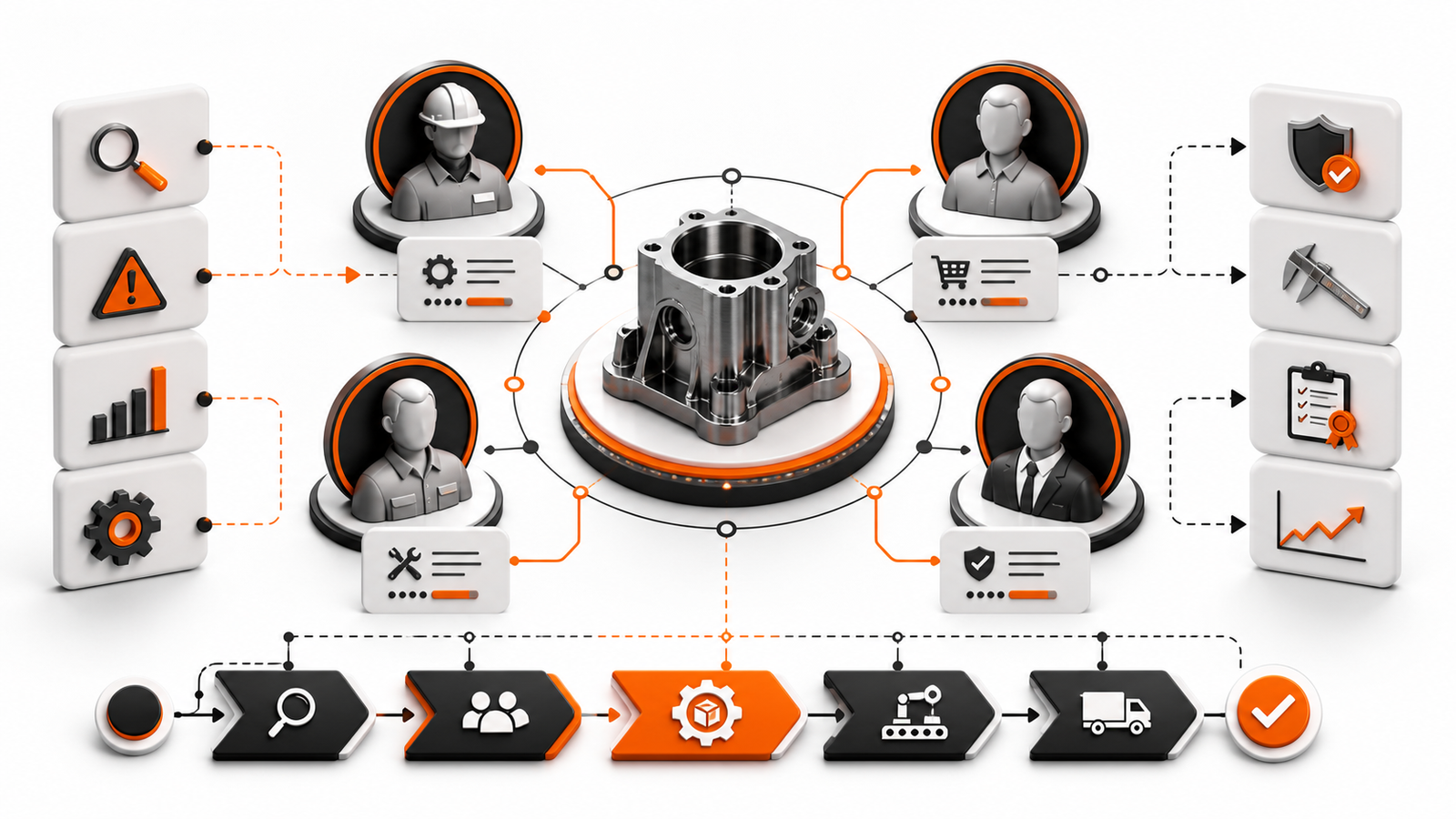
    Manufacturing product connected to a B2B buying committee, GPTWala guide
    GPTWala Business Hub visual guide for B2B buyer persona manufacturing.

    Reviewed and updated: 12 August 2026

    A manufacturing buyer persona should describe a real buying role inside a qualified account: what that person must achieve, which technical or commercial risk they own, what evidence they need, what questions appear at each stage and how they influence approval. Do not collapse the user, engineer, procurement, finance and final authority into one fictional person.

    This guide owns buying-role research and the persona card, while the ICP defines account fit. This guide gives you an operating method, not a promise of rankings, enquiries, sales or profit. Platform policies, fees, eligibility and laws can change, so verify the linked primary sources and your own commercial records before implementation.

    Table of contents

    1. What this guide helps you decide
    2. Build the source-of-truth sheet first
    3. A practical implementation workflow
    4. Use the decision table
    5. Apply it to Indian product businesses
    6. Use AI without losing business truth
    7. Avoid the common failure patterns
    8. Measure progress with operating evidence
    9. A 30-day implementation plan
    10. Frequently asked questions

    What this guide helps you decide

    The real question is not whether a B2B buyer persona sounds useful. The question is whether it solves a defined buyer or operating problem for one product, audience and channel without breaking product truth, margin, consent or delivery capacity.

    Use these diagnostic questions before spending money or assigning work:

    • Which account types fit capability and economics?
    • Who initiates, specifies, evaluates, approves, buys, receives and uses?
    • What failure is each role trying to prevent?
    • Which documents or demonstrations count as proof?

    Write the answers in one decision note. If a critical answer is unknown, make discovery the next task. Do not let an attractive tool, template or competitor example silently become the strategy.

    Build the source-of-truth sheet first

    Every execution step should pull facts from an approved record. A source-of-truth sheet prevents a copywriter, agency, AI tool or busy salesperson from filling a gap with a plausible but wrong product promise.

    Truth item Authoritative source Owner Stop condition
    Product and offer facts Approved SKU, catalogue and offer master Product or merchandising owner A buying-critical field is missing or inconsistent
    Buyer need and language Recorded enquiries, interviews and sales notes Sales or customer owner The audience is assumed rather than evidenced
    Price, margin and fulfilment Current finance, stock and delivery records Finance or operations owner The promise cannot be fulfilled profitably or reliably
    Channel and permission rules Current platform policy and consent record Channel owner Permission, eligibility or policy is unclear

    Add a version date to the sheet. When price, stock, specification, channel rule, audience permission or fulfilment promise changes, pause affected assets until their owner approves the update.

    A practical implementation workflow

    Step 1: Start with won, lost and rejected opportunities

    Review RFQs, calls, emails, objections, revisions and post-order issues.

    Evidence before moving on: A role list grounded in actual journeys.

    Step 2: Interview by role

    Ask about trigger, current process, risk, criteria, proof, internal approvals and disqualifiers.

    Evidence before moving on: Notes separate observed facts from interpretation.

    Step 3: Map stage-specific questions

    Order questions from problem recognition through specification, feasibility, quote, approval, order and repeat.

    Evidence before moving on: Content and sales assets have a stage owner.

    Step 4: Build the persona card

    Include role, job, influence, risk, evidence, objections, vocabulary, channel and next action.

    Evidence before moving on: The card changes a content or sales decision.

    Step 5: Validate in new opportunities

    Use the card to prepare questions and assets, then log missing roles or surprises.

    Evidence before moving on: Quarterly persona updates from evidence.

    Do not combine all steps into one launch. A small controlled version creates evidence that can be reviewed. A large rollout creates more places for the same unnoticed error to spread.

    Use the decision table

    Situation Recommended action Avoid
    User and buyer are different Create linked role cards Writing only for procurement
    Technical evaluator appears late Add proof earlier without bypassing process Overpromising to the initiator
    Small customer has one person in many roles Combine roles but preserve decision questions Assuming enterprise complexity
    Persona contains private speculation Remove unsupported or unnecessary traits Sensitive inference

    Treat this table as a starting policy. Your product risk, average order value, buying cycle, staff coverage, cash cycle and after-sales burden may require stricter gates.

    Apply it to Indian product businesses

    Component manufacturer

    Engineer owns fit, procurement owns commercial terms and quality owns approval. The content path separates drawings, material proof, MOQ and audit requirements.

    Proof to keep: Role-specific questions and approval cycle.

    Packaging converter

    Brand, purchase and production teams value different proof. The persona map routes artwork, material, quantity and lead-time evidence to the right stage.

    Proof to keep: Revision and rejection reasons.

    Equipment supplier

    Operator, maintenance, finance and owner share the decision. The seller documents use, installation, service and commercial proof without inventing ROI.

    Proof to keep: Qualified opportunity and acceptance record.

    These examples are intentionally operational rather than aspirational. Replace every placeholder with current records from the actual business. Do not present a fictional example as a client result or an industry benchmark.

    Use AI without losing business truth

    AI can help organise approved facts, draft alternatives, summarise interviews, classify enquiries, produce controlled content variants and flag missing fields. It must not invent specifications, materials, prices, discounts, stock, delivery dates, certifications, customer consent, testimonials or commercial results.

    Use a four-part control:

    1. Bound the input: provide only permitted, current source material.
    2. Constrain the output: state what may change and what must remain exact.
    3. Review by role: the product or commercial owner checks buying-critical facts.
    4. Record release evidence: keep the source version, prompt or brief, reviewer, corrections and approval date.

    For customer data, use approved accounts and collect only what the workflow genuinely needs. Do not paste private buyer lists, confidential price sheets or unreleased product files into an unapproved tool. India’s data-protection requirements and implementation timelines should be checked against current official MeitY material and qualified advice for the business.

    Avoid the common failure patterns

    • One “decision-maker” persona: Map the buying group and influence.
    • Demographic decoration: Prioritise role, risk, criteria and evidence.
    • Only successful deals: Study losses, no-decisions and rejected RFQs.
    • Persona without workflow: Connect each insight to content, question or handoff.

    The most expensive failure is usually not weak wording. It is a mismatch between the public promise and the business that must fulfil it.

    Measure progress with operating evidence

    Do not use reach, clicks or message volume as proof of business value by themselves. Connect upstream activity to a verified downstream event.

    Measure Definition Decision it supports
    Role coverage Qualified opportunities with named relevant buying roles Whether discovery is complete
    Question coverage Stage-critical questions answered with approved evidence Whether content supports decisions
    RFQ completeness Opportunities with required technical/commercial fields Whether qualification improves
    Decision-cycle exceptions Delays caused by missing role, proof or approval Which persona assumption is wrong

    Record the denominator, time window, product or offer, channel, source and owner for every rate. Keep observed results separate from forecasts. A short test can show a problem, but it may not support a broad conclusion.

    A 30-day implementation plan

    Days 1 to 5: define

    Choose one product, audience, channel and business outcome. Complete the source-of-truth sheet, baseline and stop rules. Name the owner who can approve or stop the work.

    Days 6 to 12: build

    Create the smallest usable version. Test links, mobile reading, forms or message routing, exact product facts, price basis, permissions and team handoffs. Use internal testers before real buyers.

    Days 13 to 20: run a bounded pilot

    Release to a limited, relevant audience or product set. Log every material exception. Do not expand merely because the asset looks polished or early engagement is positive.

    Days 21 to 26: reconcile

    Connect platform events to enquiry, order, delivery, return and finance records as relevant. Review complaints, mismatches, duplicate handling, response delays and workload.

    Days 27 to 30: decide

    Choose one outcome: keep, fix, stop or expand one variable. Record why, what changes next and when the next review occurs. Expansion should preserve the same truth, consent and approval controls.

    Connect this work to the GPTWala DAA framework

    The DAA content layer can answer the right manufacturing questions only after the buying roles and stages are visible. If your product business still depends mainly on walk-ins, dealer calls, exhibitions or forwarded catalogues, GPTWala’s free DAA workshop explains how digital presence, AI-assisted content and controlled WhatsApp-led demand generation can work as one system. The workshop is educational and does not guarantee traffic, leads, orders, sales, earnings or profit.

    Frequently asked questions

    How is a B2B buyer persona different from an ICP?

    The ICP defines which account is a good fit. Buyer personas describe the people and roles inside that account who use, evaluate, influence, approve or purchase. A manufacturer usually needs both.

    How many personas does a manufacturing business need?

    Use only the roles that change a real decision. A simple purchase may need one combined role; a technical capital purchase may require user, engineering, procurement, finance and authority maps.

    Can AI create buyer personas from my CRM?

    AI can summarise permitted, clean records and suggest patterns, but it can also amplify incomplete or biased data. Remove unnecessary personal information, verify findings with people and outcomes, and never treat generated traits as facts.

    Can a small Indian product business start a B2B buyer persona without a large budget?

    Yes, if it starts with one product, one audience, one owner and one measurable buyer action. A small budget does not remove the need for accurate product facts, realistic fulfilment, permission and a stop rule. Expand only after the first bounded version produces trustworthy operating evidence.

    Can AI automate a B2B buyer persona?

    AI can assist with research organisation, drafting, classification and controlled variants. It should not invent product specifications, prices, stock, delivery promises, customer permission, testimonials or results. A named human owner must verify buying-critical facts and approve release.

    How long should I test a B2B buyer persona before deciding?

    Use a test window long enough for the relevant outcome to mature. A product-page test may need enough qualified visits; a B2B workflow may need the full enquiry-to-decision cycle; retention work may need a repeat-purchase window. Define the event, denominator and review date before launch instead of choosing a universal number of days.

    Sources checked for this guide